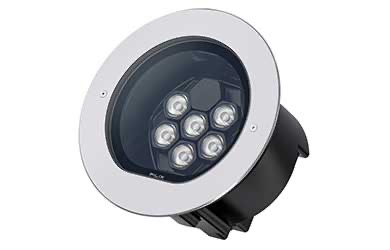

Condensation inside a luminaire is not always a sign of water ingress or a faulty product. In many outdoor and high-humidity environments, it is the result of temperature changes, trapped moisture vapour, and pressure differences—issues that a well-designed pressure-equalization vent can significantly reduce.
Why Condensation Happens in Luminaires
Even an IP-rated luminaire can experience condensation. An IP rating describes protection against dust and water under defined test conditions; it does not mean the air inside the fixture is completely dry or that condensation can never form on a lens or reflector.
When a luminaire switches on, internal components heat up. When it switches off, or when outdoor temperatures fall quickly, the air inside cools and pressure changes. If moist air is trapped inside, water vapour can condense on cooler surfaces such as the lens, reflector, or housing.
Temperature changes create a pressure differential between the inside of the luminaire and the external environment. Over time, repeated pressure changes place stress on seals, gaskets, cable entries, and housing joints.
This can gradually weaken the enclosure and increase the risk of water or contaminants entering the fixture. In severe cases, pressure stress can contribute to seal failure, cracks, or premature degradation of the luminaire.
What Is Venting in Lighting?
Venting does not mean leaving an open hole in the luminaire. In professional lighting, it usually means integrating a pressure-equalization vent with a breathable membrane.
The membrane allows air and water vapour to pass in both directions while blocking liquid water, dust, and other contaminants. This helps the luminaire “breathe”: internal pressure equalizes with the outside environment, and trapped moisture vapour can escape before it condenses.
Condensation vs. Water Ingress
Lighting designers and installers should distinguish between temporary condensation and actual water ingress.
| Symptom | Likely explanation | What to check |
|---|---|---|
| Light fog on the lens that disappears | Moisture vapour condensing during temperature change | Vent position, installation environment, operating cycle |
| Persistent droplets or pooling water | Possible seal failure, cable-entry issue, or blocked vent | Gaskets, cable glands, housing joints, vent condition |
| Corrosion, dirt, or optical contamination | Long-term moisture or contaminant ingress | Enclosure integrity, maintenance history, installation details |
| Fog appears only after rain or washing | Pressure-driven ingress or compromised sealing | Vent placement, seal compression, cable entry sealing |
A vent reduces trapped condensation, but it cannot completely eliminate the possibility of condensation in every enclosure. Its purpose is to minimize the amount of moisture that remains trapped inside over time.
Common Questions from Lighting Designers
Does condensation mean the luminaire is not waterproof?
Not necessarily. Temporary fogging can occur when moisture vapour inside the fixture condenses during temperature changes. Persistent water, corrosion, or contamination should be investigated as possible ingress or installation issues.
If a luminaire is IP66 or IP67, why does it need a vent?
A high IP rating protects against water and dust under defined conditions, but it does not remove the physical effects of temperature and pressure changes. A breathable vent helps manage those pressure differences while supporting the enclosure’s ingress protection.
Can a vent let water into the luminaire?
A properly designed pressure-equalization membrane allows air and vapour to pass through while blocking liquid water and contaminants. Problems usually arise when the vent is damaged, blocked, incorrectly installed, or bypassed by a poorly sealed cable entry.
Should condensation be wiped from the lens?
Temporary condensation will usually disappear as conditions equalize. If moisture repeatedly returns, inspect the vent, seals, cable entries, and installation environment rather than treating only the visible symptom.
Go Deeper with the Video
For a clearer explanation of why condensation appears in luminaires, how pressure-equalization vents work, and what lighting designers should check during specification and installation, watch the video embedded in this blog. Vedran explains the practical link between condensation, venting, enclosure reliability, and long-term lighting performance.
-
 10 November 2026
Check In at Hotel Luminii
-
19 November 2026
IK Ratings, Anodization & Powder Coating
-
05 November 2026
IP Ratings in Lighting